
In demanding environments, a tablet’s performance is only as reliable as its battery. Whether deployed in industrial facilities, outdoor fieldwork, or mobile operations, rugged tablets face conditions that ordinary consumer devices cannot withstand. From extreme temperatures to extended use in the field, battery design is a critical factor that directly impacts operational efficiency, reliability, and total cost of ownership.
Standard consumer tablets are designed for general-purpose, short-duration use. They often fall short under the rigorous demands of professional applications. Common limitations include:
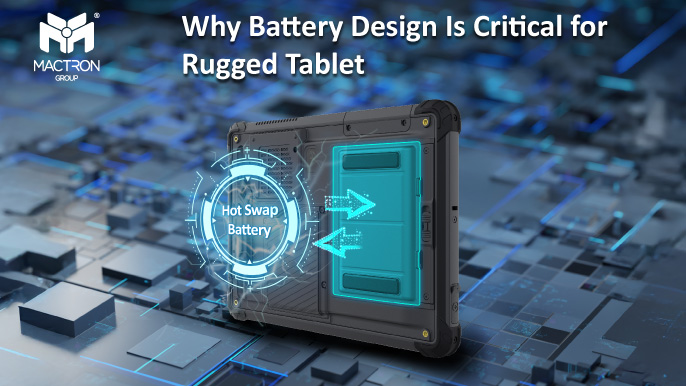
Rugged tablet battery design focuses on hot-swappable solutions, flexible power inputs (AC/DC/Vehicle), and wide-temperature stability. These features ensure uninterrupted operation in the field, minimize downtime during long shifts, and maintain consistent performance across extreme environmental conditions.
Battery reliability is central to overall productivity. Poor performance can interrupt critical tasks, reduce device availability, and increase maintenance costs. Rugged design directly addresses these concerns, ensuring devices remain powered and ready whenever needed.
| Feature | Standard Tablet | Rugged Tablet |
|---|---|---|
| Battery Design | Fixed (Internal) | Hot-Swappable (Removable) |
| Operation | Requires downtime to charge | 24/7 Uninterrupted |
| Environment | Standard Office Use | Extreme Heat/Cold (-20~60°C) |
| Power Source | Standard AC Adapter | AC, DC, Vehicle, Docking |
| Lifespan | 3–5 years | 7–10+ years (Replaceable) |

In rugged tablet applications, battery design is a core component that underpins reliability and performance. Thoughtful engineering in battery architecture allows professionals to trust that their devices will keep running, no matter the conditions.